In November 2025, the EU Counsil formally adopted of one of the most substantial reforms to EU chemicals governance in over a decade. The new “One Substance, One Assessment” (OSOA) package introduces a data platform that unifies information on chemical hazards, emissions, uses, and human exposure to strengthen chemical safety and transparency across the EU.
For many sectors, this marks a shift in how chemical information is managed and used. For the battery industry, it represents an alignment with the realities of gigafactories and recycling facilities, where complex materials and fine particles are handled at scale.
In our recent article, “State-of-the-Art Doesn’t Always Mean Circular”, we highlighted research showing how large volumes of critical materials can be lost through invisible pathways and the resulting risks to workers, equipment, and products. The EU’s new reforms speak directly to this gap, strengthening the policy framework needed to make these risks more visible and manageable.
What is OSOA?
The One Substance, One Assessment (OSOA) reform is the EU’s effort to make chemical safety rules clearer and easier to apply in practice. It grows out of the EU Chemicals Strategy for Sustainability (2020) under the European Green Deal’s Zero Pollution ambition and was created to solve a long-standing problem: the same chemical has often been assessed multiple times under different EU laws, by different agencies, using much of the same evidence. That has made decisions slower and less consistent, and harder to update when new risks emerge.
At its core, OSOA introduces an “assess once, use across legislation” principle so decisions in different sectors can rely on a shared scientific foundation. It does this through three linked measures: a common EU chemicals data platform as a one-stop shop for assessment evidence, clearer task-sharing and cooperation between EU scientific agencies, and stronger mechanisms for earlier detection of emerging risks and safer alternatives.
The package was proposed by the Commission in December 2023, gained broad backing across EU institutions and scientific bodies, and is now fully adopted after Parliament’s approval in October 2025 and Council’s formal adoption in November 2025. The acts will be published in the EU Official Journal after final legal-linguistic processing, a step that can take from around two weeks to several months, and will enter into force 20 days later. Implementation will then roll out in phases, including the build-out of the common data platform over the next three years.

How it Impacts the Battery Industry
Battery manufacturing, recycling, and refining operate in environments that are highly prone to airborne metal contamination and fine particulate emissions. While OSOA is a horizontal reform that applies across many sectors, it is particularly relevant where complex chemical and particle mixures influence both safety and performance.
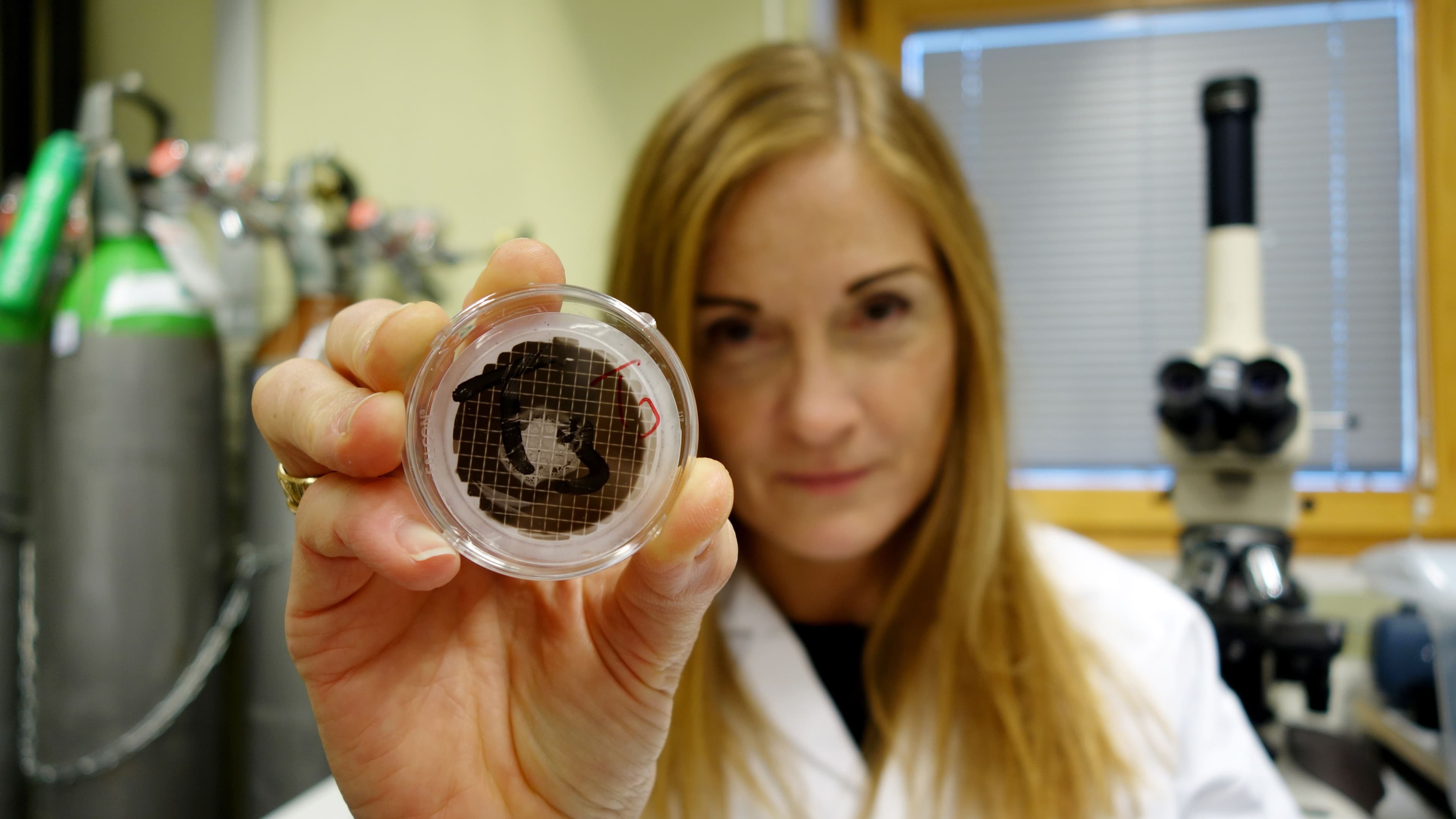
Research and operational experience show that the smallest, often invisible particles pose the greatest risk — they can bypass typical protective measures and reach deep into the lungs, as Christina Isaxon explains in our recent interview. In battery production, fine powders can remain airborne or settle on sensitive surfaces even when environments appear clean, and routine activities such as movement or maintenance can release particles into the environment.
These insights help explain why the EU is placing more emphasis on early risk detection, clearer reporting, and better monitoring of contaminants — including those captured through human biomonitoring and environmental monitoring programmes.
The particles we’re most concerned about are the ones we cannot see. These are the ones that reach deep into the lungs, or move unpredictably inside controlled environments.”
Dr. Christina Isaxon
Associate Professor, Lund University
A New Chapter
For battery manufacturers, OSOA introduces a more data-driven context. Over time, this will mean clearer expectations to document exposure pathways, justify material choices, consider safer alternatives, and demonstrate continuous improvements in workplace safety and contamination control.
The underlying message is consistent: prevent where possible, detect issues early, and report with clarity. Compliance becomes a more continuous part of operations rather than a periodic checkpoint.
While OSOA is primarily focused on chemical safety, the shift toward shared data on substances and emissions can improve traceability and make material losses more visible, supporting circularity. Even as it adds new considerations to already complex production environments, it supports manufacturers who are actively integrating contamination control, worker protection, and circular practices into daily operations.