Where did a battery’s materials come from? Can it be replaced? What can be recovered when its working life ends? In 2027, new EU battery requirements will put these questions into sharper focus.
For companies supplying batteries to the European market, regardless of their origin, preparation means understanding which obligations apply and whether their data, products and processes are ready.
Building on our 2024 comparison of EU and US battery initiatives, we look at the next milestones and why circularity needs attention during production as well as after use.
The Battery Passport
Every battery has a story: where its materials came from, how it was made and what value remains after years of use. The battery passport makes that story accessible through a digital record linked to the battery by a QR code.
From 18 February 2027, passports become mandatory for electric vehicle batteries, light means of transport batteries such as those used in e-bikes, and industrial batteries above 2 kWh placed on the EU market or put into service. Information about the battery chemistry and capacity will be publicly accessible, while detailed composition and dismantling instructions will be restricted.
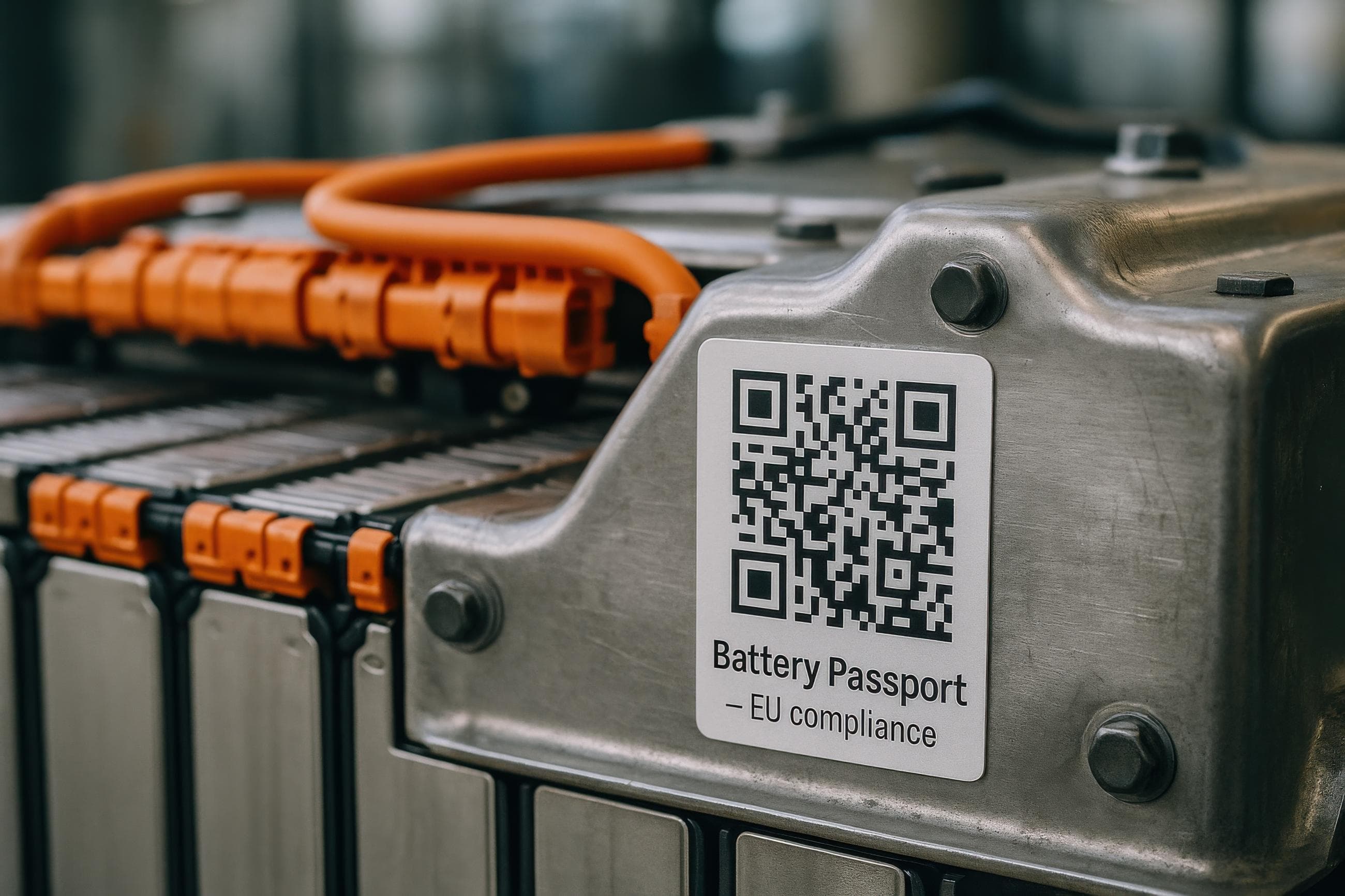
Battery Passport – Adobe Stock
Preparation is already underway. The EU’s Digital Product Passport Registry became operational in July 2026, followed by updated Commission guidance in August. The guidance clarifies which information is required from February 2027 and which applies later or only in specific circumstances. Carbon-footprint, recycled-content and due diligence information follow their own regulatory timelines.
Some companies moved ahead of the deadline. Volvo Cars was an early pioneer, who together with Circulor introduced the world’s first battery passport for a production electric vehicle with the EX90 in 2024. It gave drivers access to information about their battery’s material origins, carbon footprint and recycled content.
The effort has since broadened across the industry. Building on its earlier pilots, the Global Battery Alliance presented results from its 2026 operational trials, bringing together 17 supply-chain partnerships to test how battery data can be collected, exchanged and verified.
The practical test is what people can do with that information: make better purchasing decisions, service a battery, assess it for reuse or recover its materials. For companies preparing now, the work starts with making that information reliable, accessible and useful.
Preparing for Battery Recycling
A used battery still contains valuable resources. Information about its composition and condition can help recyclers understand what they are handling and how to recover its materials. Collection systems and processing capacity turn that knowledge into action.
By the end of 2027, recyclers must achieve material recovery rates of 90% for cobalt, copper, lead and nickel, and 50% for lithium. Separately, producers or their producer responsibility organizations must meet a 63% collection target for waste portable batteries.
Mercedes-Benz offers a concrete example of this investment. In October 2024, it opened its Kuppenheim recycling facility, bringing material recovery into its own operations to supply new batteries. Materials from one generation of batteries can become resources for the next.
However, recovery begins before a battery reaches a recycling facility. Its design, material composition and handling all influence what can be recovered and how.
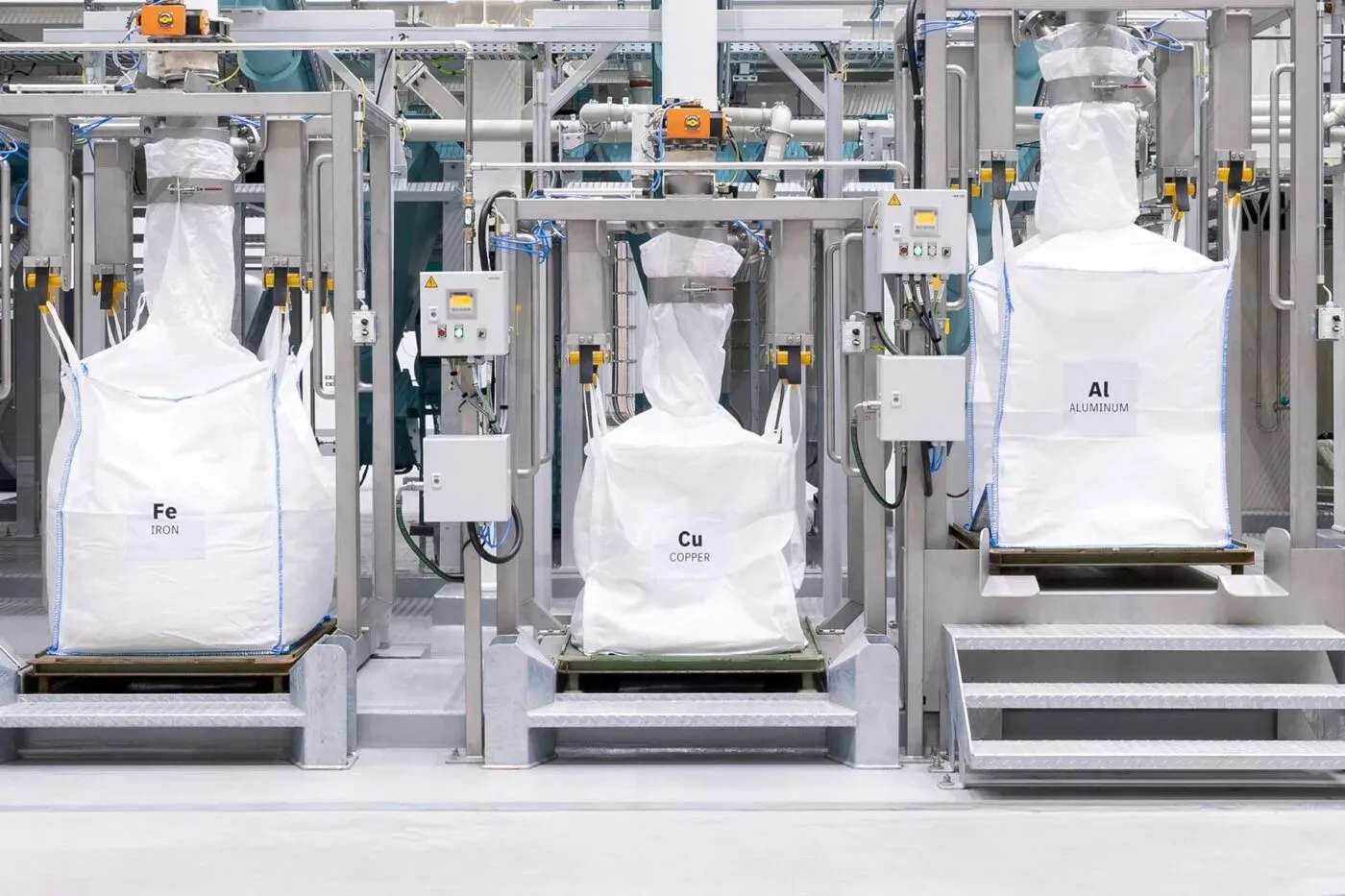
Mercedes Benz Kuppenheim Facility – Mercedes Benz
Responsibility Across the Battery Lifecycle
The regulation follows the battery’s journey, with requirements reaching from raw-material sourcing to product design and recovery. The next milestones vary by battery type.
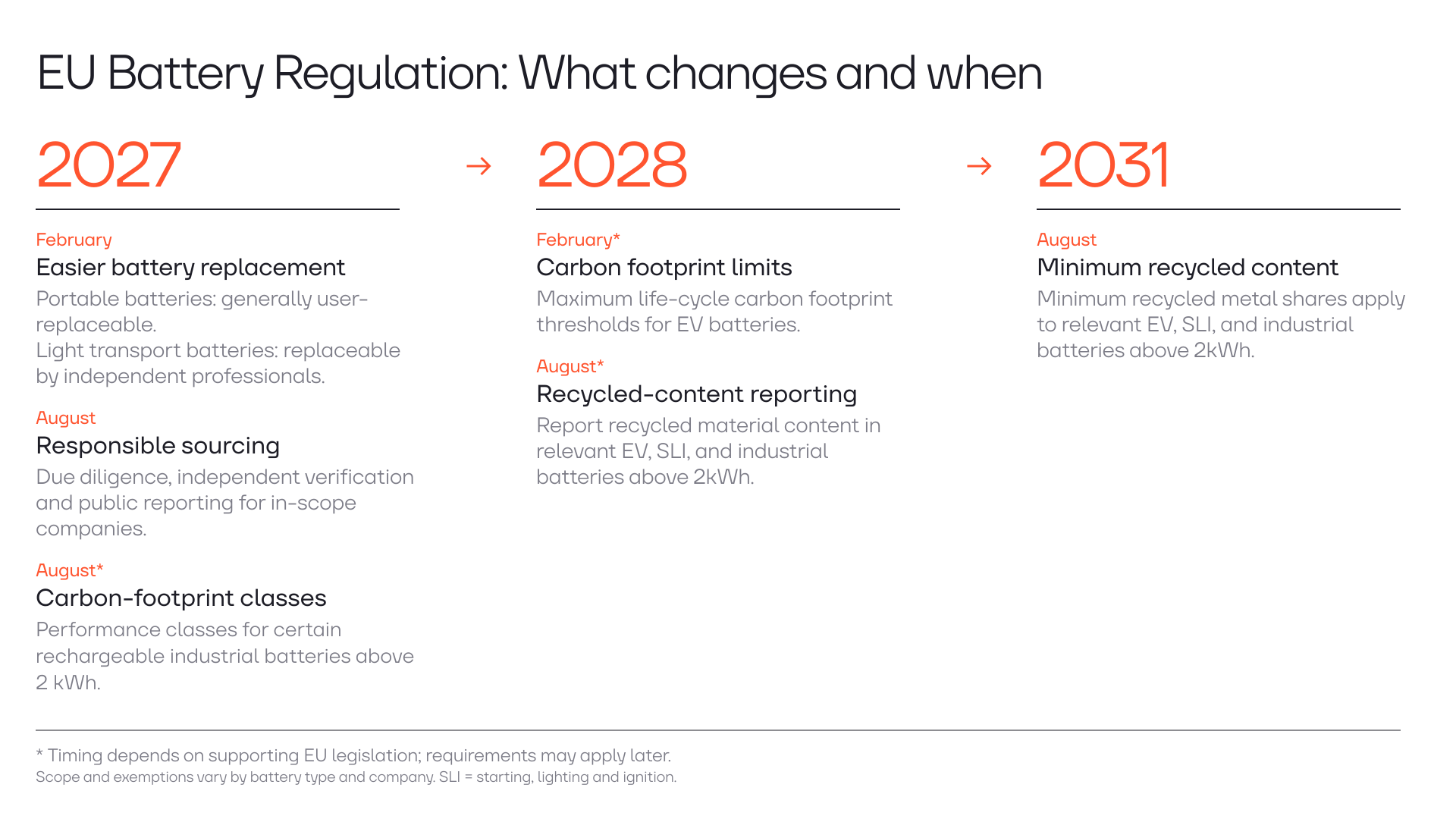
- Responsible sourcing: From August 2027, companies placing batteries on the EU market or putting them into service must meet due diligence requirements covering social and environmental risks linked to cobalt, natural graphite, lithium and nickel, including independent verification and public reporting.
- Product design: From February 2027, portable batteries built into products must generally be removable and replaceable by users. Batteries in light transport vehicles, such as e-bikes, must be replaceable by independent professionals.
- Carbon footprint: Carbon-footprint performance classes for certain rechargeable industrial batteries above 2 kWh are scheduled from August 2027, followed by limits for EV batteries from February 2028. Depending on supporting EU legislation, these may apply later.
- Recycled content: From August 2028, EV, SLI (starting, lighting and ignition), and industrial batteries above 2 kWh must report recycled content for relevant metals. This date may move depending on supporting EU legislation. Minimum recycled-content percentages apply from August 2031.
These requirements connect decisions that are often made by different teams, at different stages of a battery’s life. For manufacturers, an important part of that connection starts on the factory floor.
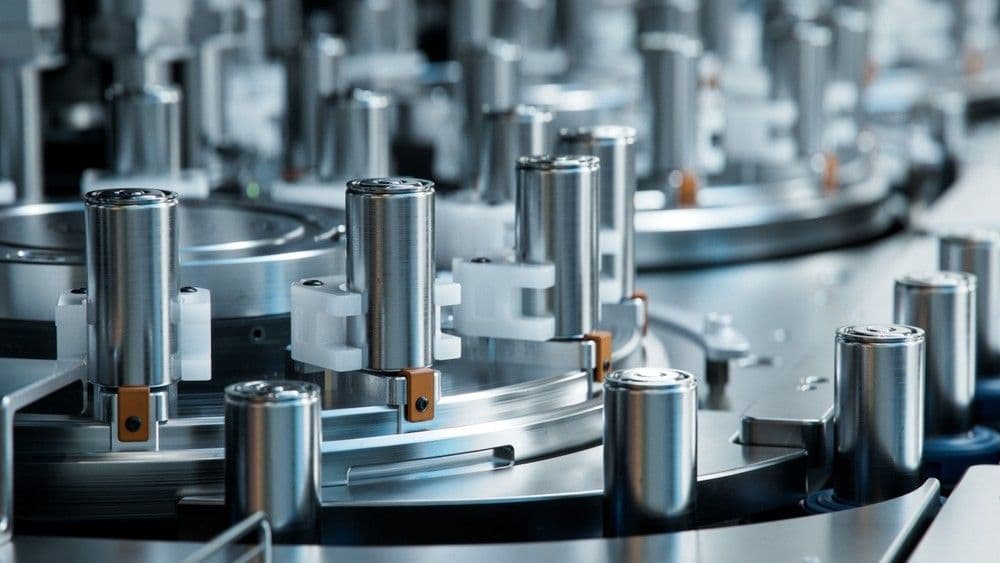
Battery cell manufacturing – Shutterstock
Circularity Starts During Production
Before a battery reaches its first user or powers anything, valuable material can already be lost during production. Material that settles on factory surfaces or enters a waste stream still needs to be handled safely and may hold value worth recovering.
This is where contamination control and circularity meet. How material is collected and handled can influence whether it remains a recoverable resource or becomes a more difficult waste stream to manage.
Preparing for 2027 is an opportunity to examine these everyday material flows: where losses occur, how material is collected and what happens next. Those decisions may receive less attention than a finished battery, but they help determine how much value stays in the production cycle.